PUBLIC–PRIVATE PARTNERSHIPS (P3)
Closing the climate and sustainable development financing gap in developed and developing markets.
Through the P3 Advisory Committee, ILN members focus on the practical conditions required to mobilize institutional capital at scale, including policy design, permitting frameworks, blended finance structures, and long-term infrastructure planning. Current areas of focus include frontier investment themes such as natural capital, affordable and resilient housing, and infrastructure systems essential to long-term economic resilience.
The P3 Committee serves as a platform for asset owner–asset manager dialogue, enabling candid exchange on real-world investment barriers and solutions. These conversations are advanced both through ILN-hosted forums and through engagement at major global stages, including COP, Climate Week, Davos, and the World Bank–IMF Meetings, where ILN helps elevate the institutional investor perspective in policy-adjacent discussions.
In parallel, ILN plays a facilitative role in global public–private collaboration. In 2025, ILN supported the launch of the G7 Infrastructure Investment Council, working alongside FinDev Canada, development finance institutions, and investor partners to help shape the structures, vehicles, and market intelligence needed to deploy private capital into commercially viable, resilient infrastructure.
Committee Leads
Laura Kaliszewski, Global Head of Client Sustainable Investing, Natixis
Andrew Harris, Managing Director, Sustainable Investing, SLC Management
RESOURCES
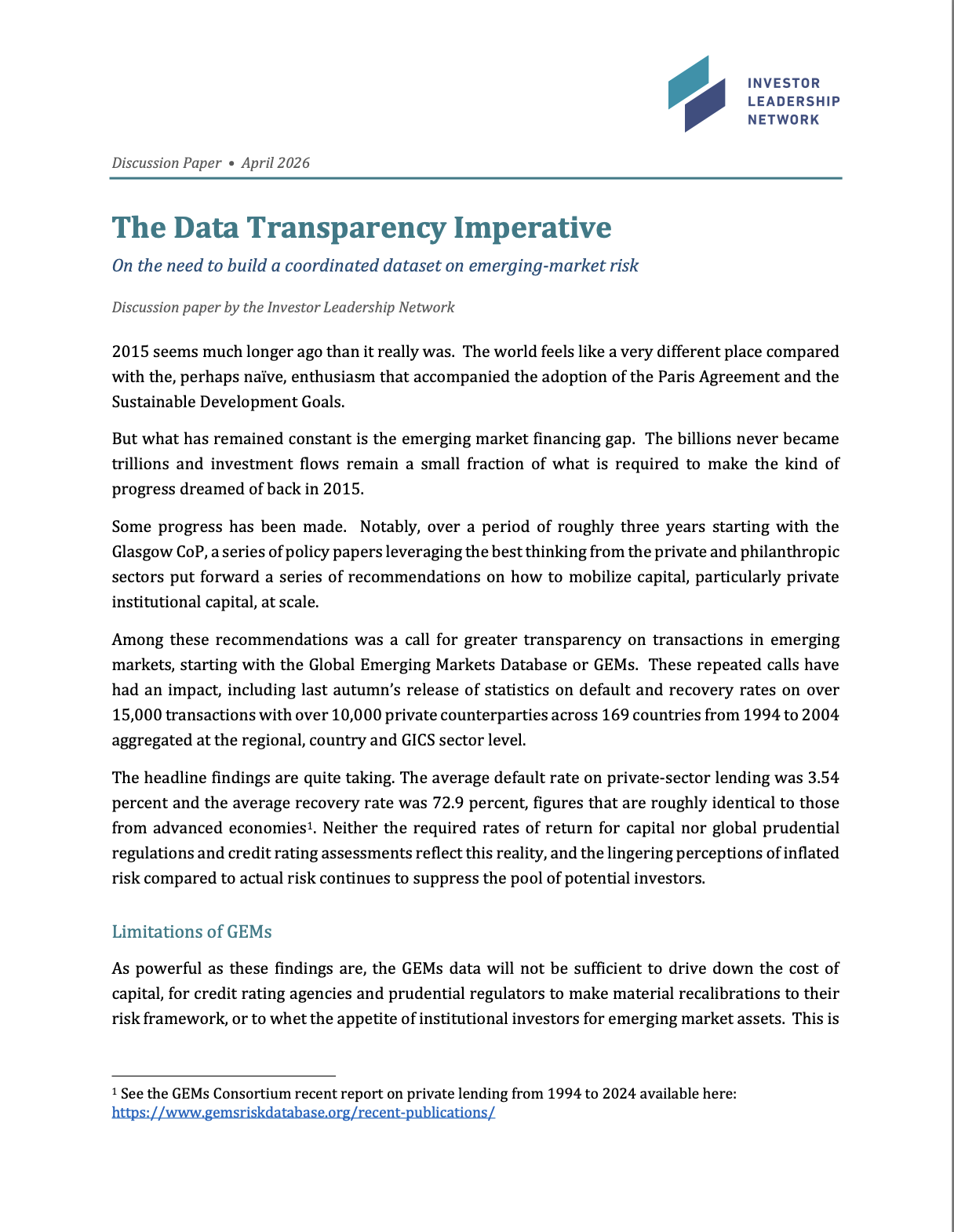
THE DATA TRANSPARENCY IMPERATIVE: ON THE NEED TO BUILD A COORDINATED DATASET ON EMERGING-MARKET RISK
In March 2026, ILN released a discussion paper titled “The Data Transparency Imperative,” which makes the case for building a coordinated, privately-held dataset on emerging-market risk. The paper argues that while the Global Emerging Markets Database has established important proof of concept, its structural limitations mean it cannot alone drive the risk repricing, regulatory recalibration, or expanded investor appetite needed to close the emerging-market financing gap. It outlines three potential payoffs of a broader data transparency initiative: more accurate risk pricing that lowers the cost of capital, reform of prudential frameworks that currently penalize emerging-market assets, and evidence of portfolio diversification benefits that speaks directly to institutional investors’ fiduciary interests. The paper was prepared in partnership with the Rockefeller Foundation, ODI Global, and Findev Canada.
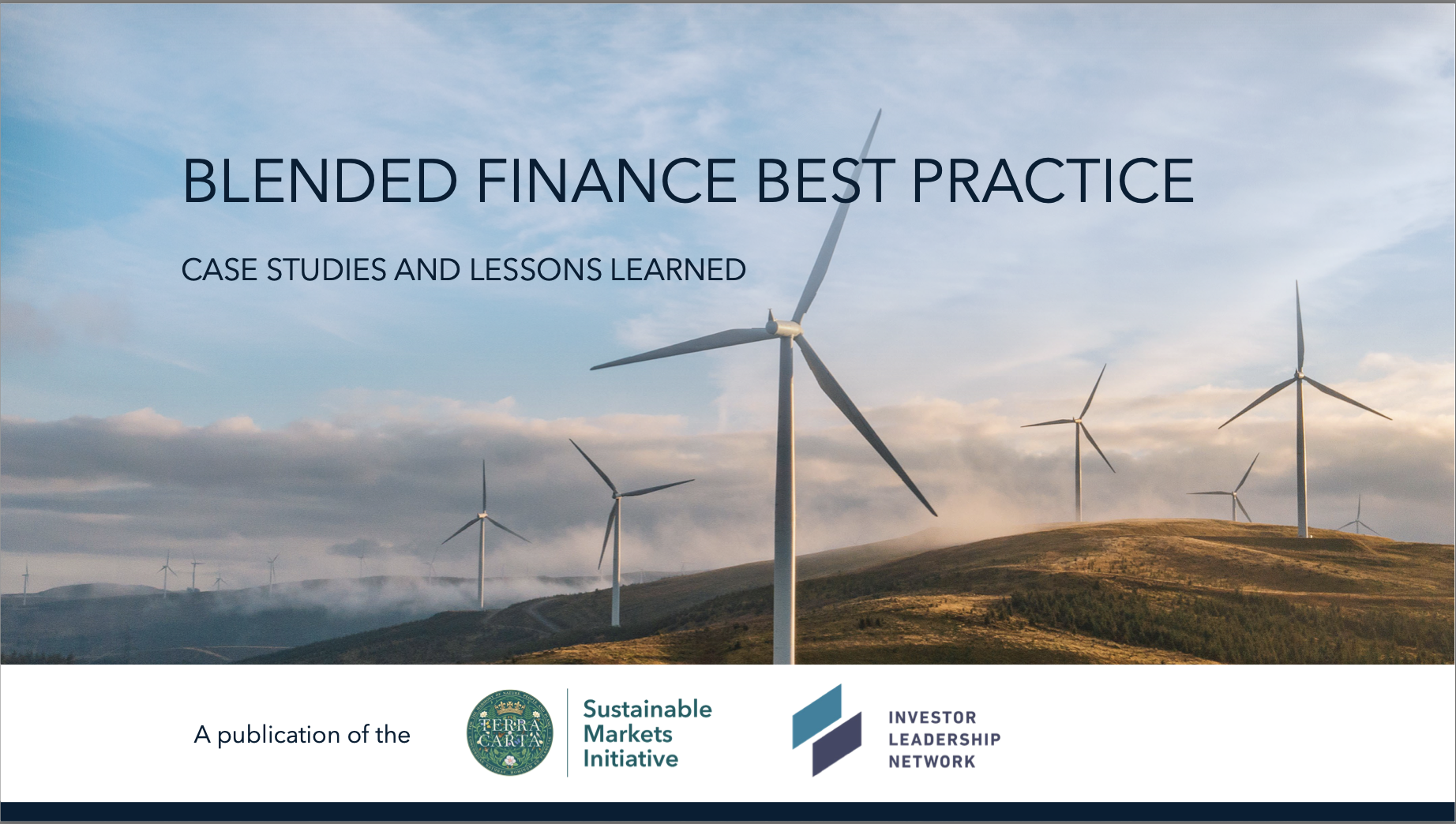
BLENDED FINANCE BEST PRACTICE CASE STUDIES AND LESSONS LEARNED
In 2024, ILN co-published this report with the Sustainable Markets Initiative (SMI), drawing on interviews with 13 institutional investors, asset managers, and blended finance practitioners. The report presents 13 case studies and 3 spotlights documenting how leading funds have structured blended finance vehicles to mobilize private capital toward climate and sustainability priorities. Institutions featured include BlackRock, Brookfield, Allianz Global Investors, Mirova, Ninety One, CDPQ, and MUFG, among others. The report identifies key enablers of successful vehicles, including risk-mitigation instruments, top-down institutional sponsorship, and alignment of objectives across public, private, and philanthropic actors. It also outlines four propellers for scaling the blended finance ecosystem: standardized structures, improved investor understanding, consolidated access to catalytic capital, and enabling regulatory conditions. Supported by the GISD Alliance, the UN-convened Net-Zero Asset Owner Alliance, and GFANZ, the report is designed to reduce development time for future blended finance vehicles by providing replicable templates and lessons from practice.
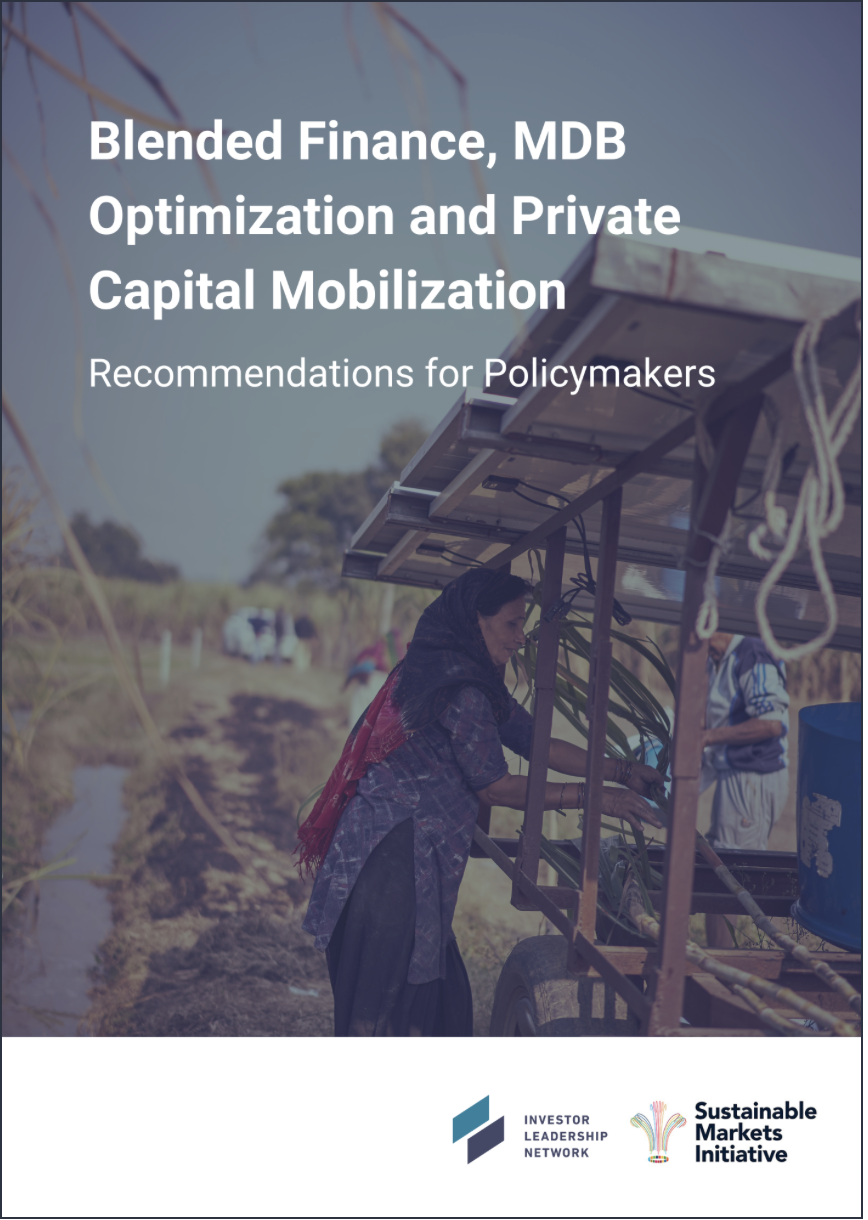
BLENDED FINANCE, MDB OPTIMIZATION, AND PRIVATE CAPITAL MOBILIZATION: RECOMMENDATIONS FOR POLICYMAKERS
In 2022, ILN released a policy brief co-produced with the Sustainable Markets Initiative outlining five recommendations for G7 and G20 leaders to accelerate the mobilization of private capital in emerging markets and developing economies. The paper argues that while MDBs bring critical knowledge and expertise, structural changes to their incentive models are needed to shift the focus from maximizing MDB finance to catalyzing the maximum amount of total capital. The five recommendations cover MDB business model reform, the creation of a USD 50 billion guarantee pool, strengthened bilateral DFI capacity, improved conditions for philanthropic and family office partnerships, and greater mobilization of domestic finance. The paper reflects the collective views of institutions belonging to ILN, SMI, GFANZ, and GISD.
BLENDED FINANCE BLUEPRINT
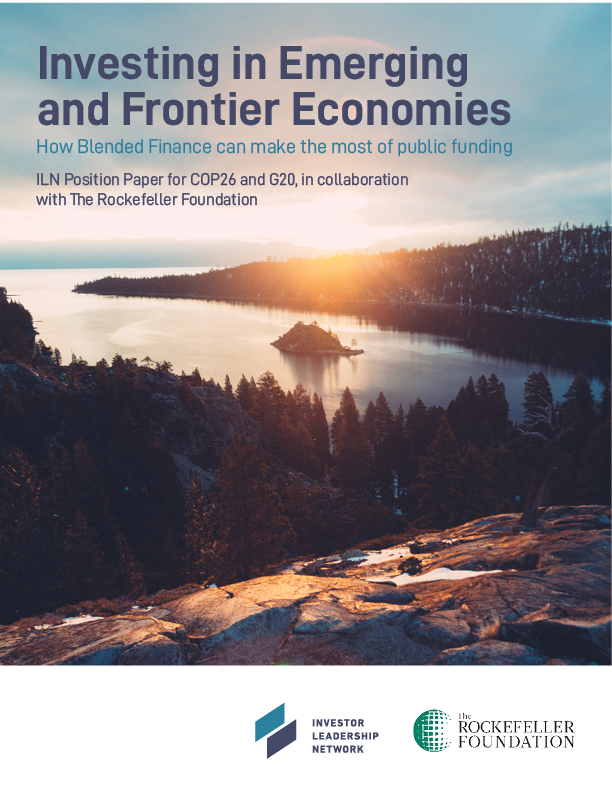
In October 2021, ILN and The Rockefeller Foundation published a ‘blueprint’ to increase blended finance partnerships titled, “Investing in Emerging and Frontier Economies: How Blended Finance can make the most of public funding.” The report identifies seven specific actions that the public sector can take over the short, medium, and long term to increase private investors’ ability to participate in blended finance partnerships.
- Access the full Blended Finance Blueprint
- Access the executive summary
- Read the press release
ROUNDTABLES
The Investor Leadership Network regularly convenes roundtables with leaders from key public and private financial institutions to discuss the feasibility of new partnerships, programs and facilities that could increase private institutional investment in markets critical to the green transition. Such roundtables to date have been held with US Special Presidential Envoy for Climate John Kerry in London; DFIs, MDBs, and heads of foundations in Washington, D.C. and at COP27 in Sharm-El-Sheikh, Egypt; Deputy Secretary General Amina Mohammed, Ambassador Bob Rae, and Ambassador Martin Hermann at the United Nations; and senior representatives from the United States Treasury.